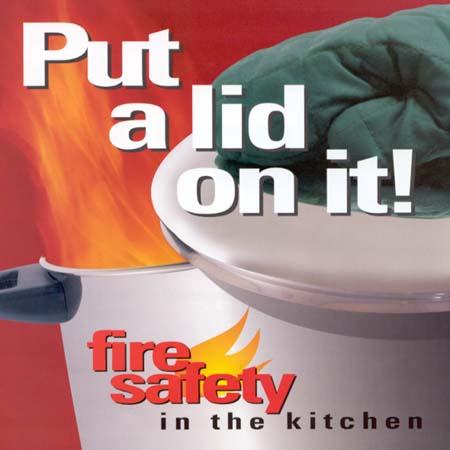
| Many families gather in the kitchen to spend time together, but it can be one of the most hazardous rooms in the house if you don't practice safe cooking behaviors. Cooking equipment, most often a range or stovetop, is the leading cause of reported home fires and home fire injuries in the United States. Cooking equipment is also the leading cause of unreported fires and associated injuries.
Safe Cooking Behaviors
It's a recipe for serious injury or even death to wear loose clothing (especially hanging sleeves), walk away from a cooking pot on the stove, or leave flammable materials, such as potholders or paper towels, around the stove. Whether you are cooking the family holiday dinner or a snack for the children, practicing safe cooking behaviors will help keep you and your family safe.
Choose the Right Equipment and Use It Properly
• Always use cooking equipment tested and approved by a recognized testing facility.
• Follow manufacturers' instructions and code requirements when installing and operating cooking equipment.
• Plug microwave ovens and other cooking appliances directly into an outlet. Never use an extension cord for a cooking appliance, as it can overload the circuit and cause a fire.
Use Barbecue Grills Safely
• Position the grill well away from siding, deck railings, and out from under eaves and overhanging branches.
• Place the grill a safe distance from lawn games, play areas, and foot traffic.
• Keep children and pets away from the grill area by declaring a 3-foot "kid-free zone" around the grill.
• Put out several long-handled grilling tools to give the chef plenty of clearance from heat and flames when cooking food.
• Periodically remove grease or fat buildup in trays below grill so it cannot be ignited by a hot grill.
• Use only outdoors! If used indoors, or in any enclosed spaces, such as tents, barbecue grills pose both a fire hazard and the risk of exposing occupants to carbon monoxide.
Charcoal Grills
• Purchase the proper starter fluid and store out of reach of children and away from heat sources.
• Never add charcoal starter fluid when coals or kindling have already been ignited, and never use any flammable or combustible liquid other than charcoal starter fluid to get the fire going.
Propane Grills
• Check the propane cylinder hose for leaks before using it for the first time each year. A light soap and water solution applied to the hose will reveal escaping propane quickly by releasing bubbles.
• If you determined your grill has a gas leak by smell or the soapy bubble test and there is no flame:
>> Turn off the propane tank and grill.
>> If the leak stops, get the grill serviced by a professional before using it again.
>> If the leak does not stop, call the fire department.
• If you smell gas while cooking, immediately get away from the grill and call the fire department. Do not attempt to move the grill.
• All propane cylinders manufactured after April 2002 must have overfill protection devices (OPD). OPDs shut off the flow of propane before capacity is reached, limiting the potential for release of propane gas if the cylinder heats up. OPDs are easily identified by their triangular-shaped hand wheel.
• Use only equipment bearing the mark of an independent testing laboratory. Follow the manufacturers' instructions on how to set up the grill and maintain it.
• Never store propane cylinders in buildings or garages. If you store a gas grill inside during the winter, disconnect the cylinder and leave it outside.
Watch What You Heat
• The leading cause of fires in the kitchen is unattended cooking.
• Stay in the kitchen when you are frying, grilling, or broiling food. If you leave the kitchen for even a short period of time, turn off the stove.
• If you are simmering, baking, roasting, or boiling food, check it regularly, remain in the home while food is cooking, and use a timer to remind you that you're cooking.
• Stay alert! To prevent cooking fires, you have to be alert. You won't be if you are sleepy, have been drinking alcohol, or have taken medicine that makes you drowsy.
Source: United States Fire Administration (USFA) |